
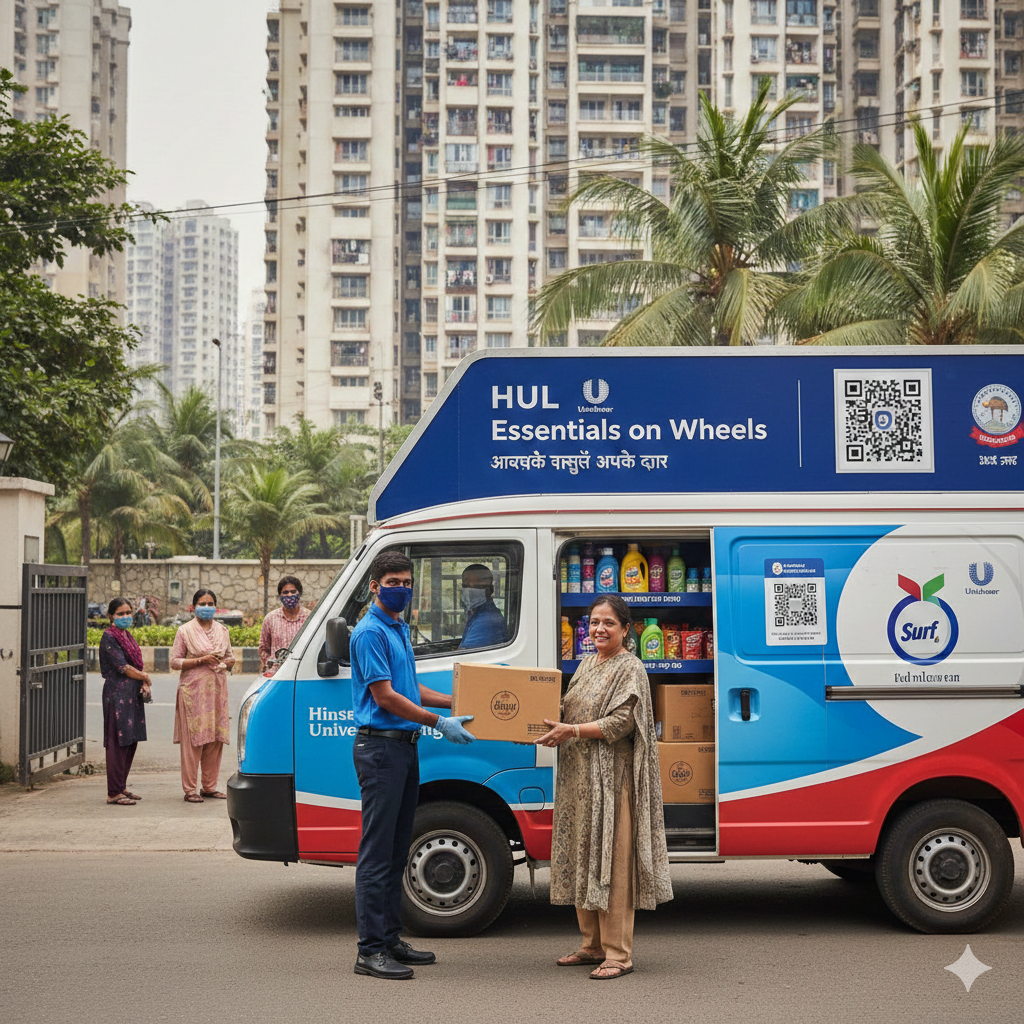
In the marketing and logistics sectors, the global pandemic of 2020 posed significant challenges. For Hindustan Unilever Limited (HUL), the lockdown in India severed the connection between the brand and its consumers.
In response, HUL launched the “Essentials on Wheels” (EOW) initiative, showcased in the MMA Global Case Study Hub. This initiative exemplifies agile marketing, mobile-first logistics, and the effectiveness of Direct-to-Consumer (D2C) strategies during an unprecedented crisis.
The Perfect Storm: A Supply Chain in Crisis
To understand the genius of “Essentials on Wheels,” one must first recall the atmosphere of early 2020. In India, the sudden nationwide lockdown triggered a domino effect of supply chain collapses.
- Labor Shortages: Migrant workers, the backbone of the transport and logistics sector, returned to their villages, leaving trucks idle and warehouses undermanned.
- Panic Buying: As fear escalated, retail shelves were stripped bare. Hoarding became a survival instinct, leading to artificial shortages of essential goods like soap, tea, and sanitizers.
- Last-Mile Paralysis: Traditional brick-and-mortar stores—the “Kirana” shops that form the heart of Indian retail—were largely shuttered. Even e-commerce giants, usually the fallback, were overwhelmed, struggling with stockouts and restricted movement.
HUL, which reaches nine out of ten Indian households, saw its business outlook downgraded. The problem wasn’t a lack of demand—demand was higher than ever—but a total breakdown in the “last mile.” Consumers were trapped at home, and the goods they needed were stuck in a fractured distribution network.
The Strategy: From Retail-Centric to Consumer-Centric
HUL’s response was not to wait for the world to reopen, but to build a new bridge. They recognized that while people couldn’t go to the products, the products had to go to the people. This birthed the Essentials on Wheels (EOW) model.
The strategy was built on three pillars: Safety, Accessibility, and Mobile Integration.
1. The Direct-to-Home (D2H) Pivot
The traditional FMCG model involves a long chain: Manufacturer → Distributor → Wholesaler → Retailer → Consumer. HUL bypassed the middle layers that were currently frozen. By creating a contactless Direct-to-Home distribution channel, they transformed their role from a supplier of shops to a direct provider for households.
2. Leveraging the Mobile Ecosystem
Mobile was the only “window” consumers had to the outside world. HUL developed a simple, intuitive mobile application designed to handle the entire HUL product portfolio. This wasn’t just about selling soap; it was about providing a digital storefront for everything from food and refreshment to home care and hygiene.
3. Hyper-Local Logistics
The “Wheels” in the title wasn’t metaphorical. HUL converted delivery vans into mobile distribution hubs. These weren’t just delivery trucks; they were a visible, physical manifestation of the brand’s commitment to the community.
Execution: Turning Mobile Clicks into Doorstep Deliveries
Implementation in a city as dense as Mumbai is a Herculean task during a lockdown. HUL’s execution was divided into two critical phases: Demand Generation and Fulfillment.
Demand Generation & Outreach
HUL didn’t just launch an app and hope people would find it. They took a targeted approach, focusing on large residential complexes and housing societies. By partnering with residential associations, they could aggregate demand.
- The App: Residents used the EOW app to browse real-time inventory.
- The Call Center: Recognizing that not everyone is tech-savvy—particularly the elderly who were most at risk—HUL integrated a call center service to facilitate orders via outbound calls.
The Backend: Syncing the Supply Chain
The true magic happened behind the scenes. The EOW app was synced directly with Unilever’s supply chain management system.
- Real-time Stocking: As items were picked from the distributor, the app updated instantly. This prevented the “ghost inventory” problem that plagued many other e-commerce sites during the pandemic.
- The “Mobile Delivery Team”: HUL didn’t just hire drivers; they trained a dedicated delivery force. These teams were schooled in strict COVID-19 sanitation protocols, ensuring that every delivery was contactless and safe. This built a level of brand trust that “gig economy” apps struggled to match at the time.
The Results: More Than Just Sales
The “Essentials on Wheels” campaign was a resounding success, earning a Bronze at the MMA Smarties. But the metrics that mattered most were human and operational.
- Consumer Trust: In a period of high anxiety, HUL became a reliable partner. By delivering the “entire portfolio,” they solved the frustration of consumers having to hunt through multiple stores for different items.
- Operational Agility: HUL proved that a massive, legacy corporation could move with the speed of a startup. They built a D2C infrastructure in weeks that would normally take years to greenlight.
- Market Leadership: While competitors were sidelined by logistics, HUL’s “Wheels” kept the brand top-of-mind and ensured that their market share didn’t just hold—it was reinforced by a sense of utility and care.
Lessons for the Future of Retail
The HUL case study is more than a pandemic success story; it is a blueprint for the future of “Phygital” retail. Here are the key takeaways for marketers today:
- Mobile is the Storefront: Your app shouldn’t just be a catalog; it should be a live link to your supply chain. Transparency about what is in stock is the ultimate customer service.
- The Last Mile is Brand-Critical: In a crisis, the person delivering the box is the brand. HUL’s investment in a trained, sanitized delivery team was as much a marketing move as it was a logistical one.
- Community Aggregation: By focusing on residential areas and housing societies, HUL optimized their delivery routes. This “cluster” approach to delivery is more sustainable and efficient than scattered home deliveries.
- Empathy as a Strategy: EOW was born out of a need to solve a consumer pain point (fear and shortage). When a brand solves a problem during a crisis, the loyalty gained is ten times more valuable than a standard transaction.
Conclusion
Hindustan Unilever’s “Essentials on Wheels” reminds us that the best marketing doesn’t always look like an ad. Sometimes, it looks like a delivery van arriving at a gate when everything else is closed.
By leveraging mobile technology to bridge the gap between a disrupted supply chain and a stranded consumer base, HUL didn’t just sell products—they delivered peace of mind. As we move further into a mobile-first world, the ability to pivot to a Direct-to-Consumer model with agility and empathy remains the gold standard for brand resilience.