
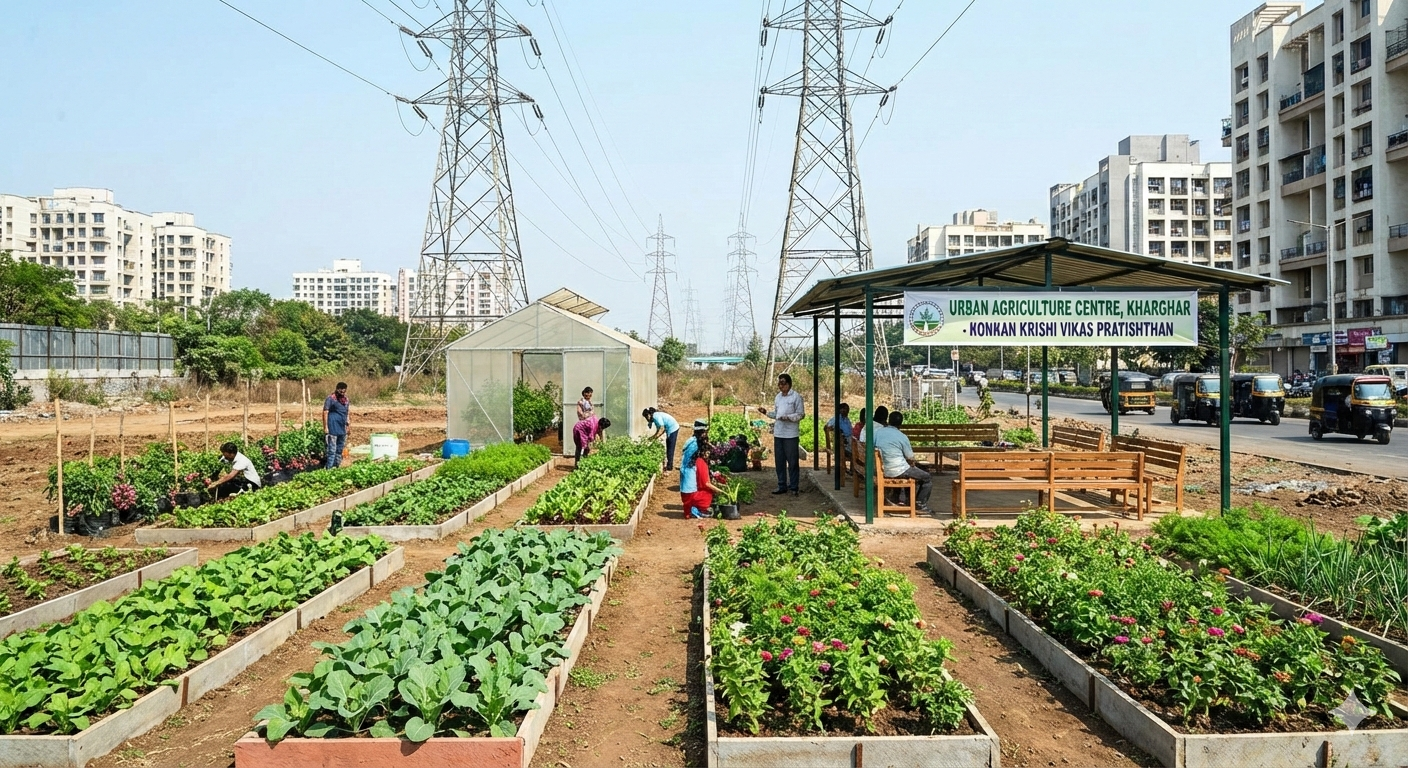
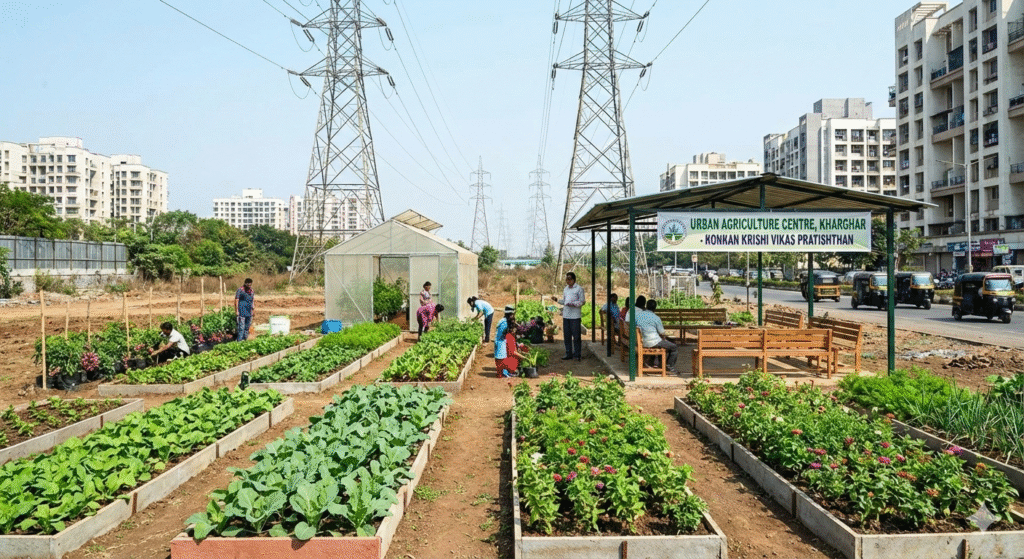
A landmark collaboration between KKVP and Dr. Balasaheb Sawant Konkan Krishi Vidyapeeth transforms an underutilised CIDCO plot into a sustainable farming hub.
NAVI MUMBAI – In a significant move toward sustainable urban living and food security, Navi Mumbai has officially inaugurated its first Urban Agriculture Centre (UAC) in Sector 5, Kharghar. This pioneering project, situated near the iconic Utsav Chowk, marks a departure from traditional landscaping by focusing on productive, natural farming techniques within a bustling metropolitan environment.
The centre is the result of a strategic Memorandum of Understanding (MoU) signed between the Konkan Krishi Vikas Pratishthan (KKVP) and Dr. Balasaheb Sawant Konkan Krishi Vidyapeeth (DBSKKV), the renowned agricultural university based in Dapoli. This partnership aims to bridge the gap between rural agricultural expertise and urban lifestyle needs.
Turning “Dead Space” into Green Corridors
One of the most innovative aspects of the Kharghar Urban Agriculture Centre is its location. The project occupies a plot originally allotted by CIDCO in 2008, which sits directly beneath high-tension transmission lines. For years, such plots remained largely underutilised due to construction restrictions.
By converting this space into an agricultural hub, the organisers have demonstrated a viable model for land use in “restricted zones.” Instead of allowing the land to become a site for debris dumping or illegal encroachment, the KKVP has transformed it into a lush laboratory for natural farming.
A Hub for Skill Development and Innovation
The centre is designed to be more than just a farm; it is an educational ecosystem. With the expertise of DBSKKV-Ratnagiri, the facility will offer:
- Skill Training: Workshops for residents on vertical gardening, hydroponics, and organic waste management.
- Natural Farming Demonstrations: Showcasing how to grow vegetables and fruits without the use of chemical pesticides or synthetic fertilisers.
- Entrepreneurship Programs: Helping urban youth and homemakers turn small-scale gardening into viable micro-businesses.
“The goal is to empower the citizens of Navi Mumbai to take control of what they eat,” said a representative involved in the project. “As the Mumbai Metropolitan Region (MMR) grows, the distance between the farm and the plate increases. This centre brings the farm to the city.”
Addressing Climate Resilience and Food Security
The timing of the centre’s opening is critical. With rising concerns over climate change and the high chemical content in commercially available produce, the Kharghar UAC serves as a “climate-resilient” model. By promoting local cultivation, the project helps reduce the carbon footprint associated with transporting food from distant rural districts.
Furthermore, the centre aims to improve local biodiversity. Planting indigenous varieties of flora creates a micro-habitat for pollinators like bees and butterflies, which are often displaced by rapid urbanisation.
Community Response and Future Outlook
Local residents have welcomed the move, noting that the greenery provides a much-needed visual and environmental break from the concrete jungle. While some concerns regarding the safety of farming under high-voltage lines were initially raised, the KKVP has assured the public that all activities are conducted following strict safety protocols and in consultation with electrical experts.
As Navi Mumbai continues its trajectory as a “Smart City,” the Kharghar Urban Agriculture Centre stands as a testament to the fact that technology and nature can coexist. Looking ahead, there are plans to replicate this model in other nodes like Vashi and Nerul, potentially turning Navi Mumbai into a leader in urban agrarian practices in India.
For now, the Kharghar centre remains open for public visits and demonstrations, inviting every “city farmer” to get their hands dirty for a greener tomorrow.