
In the landscape of the Indian Fast-Moving Consumer Goods (FMCG) sector, few brands evoke as much nostalgia and trust as Kissan. From its humble beginnings in the 1930s to becoming a staple in modern Indian kitchens, Kissan’s journey is a masterclass in product evolution, emotional branding, and strategic market adaptation.
This case study explores how Kissan—a brand now under the umbrella of Hindustan Unilever Limited (HUL)—navigated decades of competition, changing consumer preferences, and the shift from “canned food for soldiers” to “real fruit for families.”
1. The Heritage: From British Rations to Indian Breakfasts
The story of Kissan began in 1935, founded by the Mitchell Brothers in pre-Independence India. Originally established to serve British settlers and the armed forces with canned fruits and preserves, the brand’s identity was rooted in utility and preservation.
The Strategic Transitions:
- 1950: Acquired by the United Breweries (UB) Group under Vittal Mallya.
- 1993: Acquired by Hindustan Unilever Limited (HUL).
The acquisition by HUL was a turning point. It provided Kissan with the “media might” and the vast distribution network required to penetrate the deepest corners of the Indian market.
2. Product Portfolio: The Three Pillars of Growth
Kissan’s product strategy revolves around three core categories, each meticulously designed to cater to the Indian palate:
A. Jams: The Undisputed Market Leader
With a market share of approximately 60-65%, Kissan Jam is synonymous with the category.
- Innovation: Beyond the classic “Mixed Fruit,” Kissan introduced variants like Mango, Pineapple, and Orange Marmalade.
- The “Tiffin” Strategy: By positioning jam as the perfect “tiffin-time friend,” Kissan addressed a major pain point for Indian mothers: making plain bread or rotis exciting for children.
B. Ketchups and Sauces: The Battle for the Plate
In the ketchup segment, Kissan faces fierce competition from Nestle’s Maggi. However, Kissan has maintained a strong second position (and at times, the leadership spot) by focusing on “Realness.”
- The “100% Real” Claim: While competitors focused on “Hot & Sweet” or “Chilli” variants, Kissan doubled down on the quality of its tomatoes.
C. Squashes and Concentrates
Leveraging its fruit-based heritage, Kissan offers a variety of squashes (Orange, Lemon, Grape) that cater to the traditional Indian preference for homemade refreshing drinks over carbonated sodas.
3. Marketing Strategy: The Shift from Product to Emotion
Kissan’s marketing evolution is perhaps the most critical component of its case study. The brand moved from functional advertising (“it tastes good”) to emotional storytelling (“it’s real and brings us together”).
The “Kissanpur” Campaign: A Masterstroke in Experiential Marketing
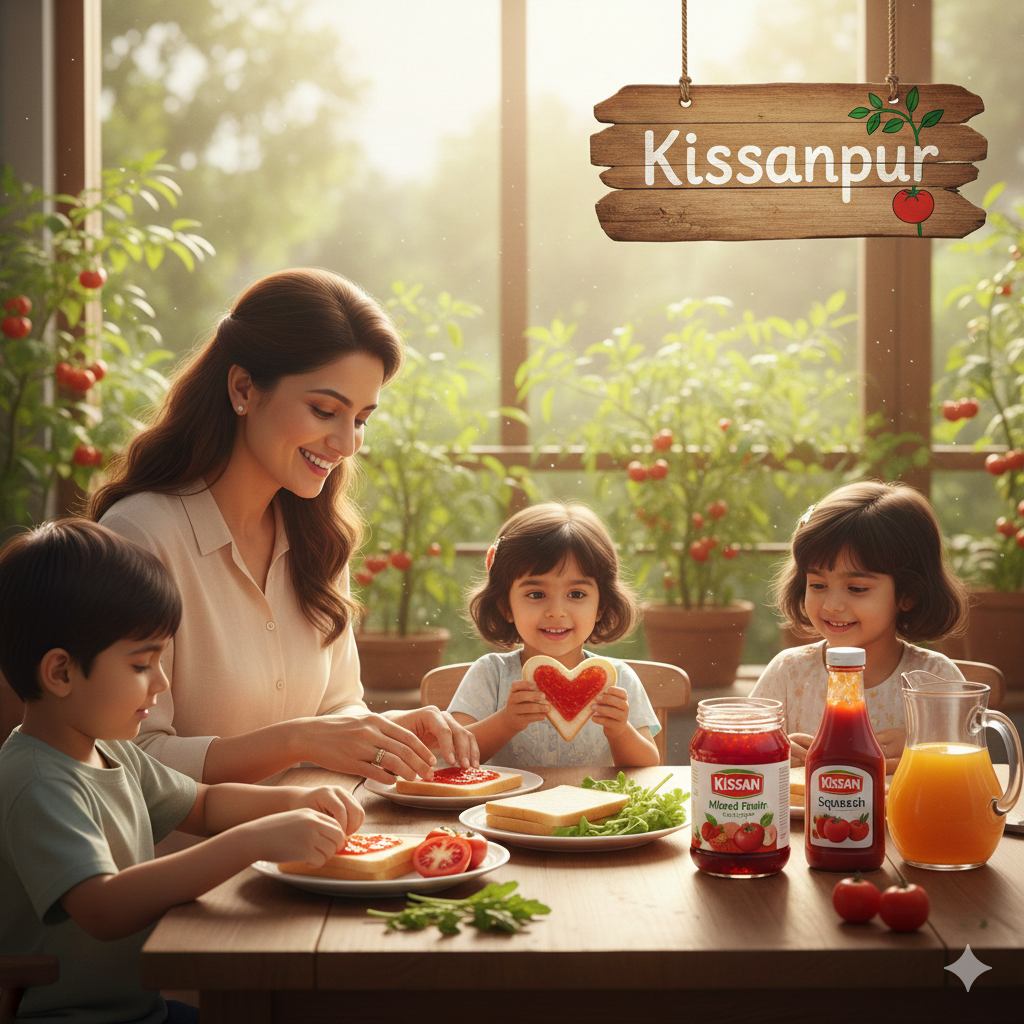
Launched in 2012, the Kissanpur campaign is one of the most awarded marketing initiatives in India.
- The Concept: Kissan distributed tomato seeds with newspapers and inside ketchup packs, encouraging children to grow their own tomatoes.
- The Impact: It moved the “100% Real Tomatoes” claim from a marketing slogan to a lived experience. By involving children in the process of farming, Kissan built a deep emotional bond with mothers, who saw the brand as a partner in their child’s holistic growth.
- Results: The campaign led to a 14.6% growth in sales, significantly outperforming the category growth of 4.4%.
The Rahul Dravid Era: “Jam Jam Jammy”
In the early 2000s, Kissan leveraged the reliability of cricketer Rahul Dravid. His nickname, “Jammy” (derived from his father working at a Kissan factory), provided a perfect, authentic brand-celebrity fit that reinforced the values of “dependability” and “wholesomeness.”
4. The 4Ps of Kissan: A Strategic Analysis
P – Element Strategy
Product Focus on “100% Real” ingredients. Diverse SKUs ranging from ₹10 sachets to 1kg glass bottles and “Squeezo” plastic packs.
Price Competitive “Mass-Premium” pricing. It remains affordable for middle-class families while maintaining a quality perception higher than local “red water” sauces.
Place Leveraging HUL’s distribution network of 7 million+ outlets. Strong presence in both traditional Kirana stores and modern E-commerce (Blinkit, Zepto).
Promotion Transitioned from TV-heavy ads to digital storytelling and influencer marketing (parenting bloggers and DIY recipe creators).
5. Challenges and Strategic Pivot Points
Even a giant like Kissan faces hurdles. The brand has had to adapt to several market shifts:
A. The “Healthy” Wave
As consumers become more health-conscious, sugar-laden jams and preservative-heavy ketchups are under scrutiny.
- Response: Kissan has introduced “No Onion No Garlic” variants and is exploring low-sugar/organic options to stay relevant to the modern, label-reading consumer.
B. Competition from Niche/D2C Brands
New-age brands like Veeba or Wingreens are capturing the urban premium market with gourmet flavors.
- Response: Kissan is focusing on its heritage and “farm-to-fork” transparency to maintain its trust advantage over newer, unproven players.
C. The “Annapurna” Experiment
In the early 2000s, HUL tried to merge Kissan with “Annapurna” (staples like salt and flour). This diluted the brand’s focus. Recognizing this, HUL eventually decoupled them, returning Kissan to its core strength: processed fruit and vegetable products.
6. Key Learnings for Product Managers
What can modern product leaders learn from the Kissan case study?
- Trust is the Ultimate Moat: In the food industry, “Mom-approved” is the highest certification. Kissan earned this through consistent quality and transparent sourcing.
- Innovation in Packaging: The “Squeezo” pack was a game-changer. It allowed kids to use the product themselves without the mess of glass bottles, increasing “product-usage frequency.”
- Contextual Relevance: Kissan didn’t just sell jam; they sold a “solution for the tiffin box.” Identifying the occasion for use is as important as the product itself.
- Agile Distribution: Success in India is won on the shelves of the local Kirana. Kissan’s availability is its greatest competitive advantage.
Conclusion: The Future of Kissan
As of 2025, Kissan remains a titan in the Indian FMCG sector. Its ability to blend the “earthy” image of a farmer (Kissan means farmer in Hindi) with a “modern, vibrant” brand persona has allowed it to transcend generations.
The future for Kissan lies in Sustainability and Nutrition. By strengthening its direct-from-farmer sourcing and reducing synthetic additives, Kissan is poised to remain the “Red Haven” of Indian kitchens for another century.